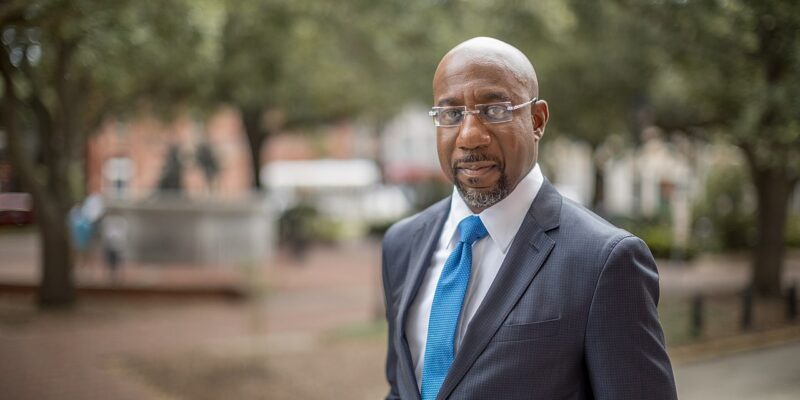

Senator Raphael Warnock (D-GA) is calling for a statewide moratorium on data centers after his recent visit to the proposed site of OpenAI’s new 3.2-gigawatt data center in Effingham County. The Senator viewed the proposed project site with Effingham resident John Smith, who lives across the street.
Who else did Sen. Raphael Warnock meet with? The Senator also met with several residents and members of the Protect Effingham Alliance who raised serious concerns about the impact of OpenAI’s plan on their community, specifically noting higher utility costs and more water, light, and noise pollution.
Does the Senator’s moratorium have any conditions? Under his proposal, the moratorium can be lifted only if:
- There are no water or electric bill increases because of the data center;
- There are no sweetheart tax giveaways to developers;
- There are no NDAs;
- The data center will not cause air and water pollution;
- There is no ambiguity around noise and light pollution.
What Sen. Raphael Warnock had to say:
- Via Press Release: “Data center developers across the country are not operating in partnership with communities, and that’s why everyday citizens on both sides of the aisle are rightly and equally concerned about this. The lack of transparency here in Effingham County and in counties across our state and across the country is unacceptable, and that’s why today I’m calling for a moratorium on data centers.”
- Via his Official X: "Big corporations are running roughshod over small communities, building massive data centers with no input from the people who live there. In many cases, it’s driving up the cost of utilities. It’s causing pollution. And it’s often being done in secret. It has to stop."
Further Context: Earlier this year, OpenAI, the company behind ChatGPT, announced plans to construct a new 1,400-acre data center in Effingham County, Georgia. The $20 billion proposal, named “Project Camellia,” will require 3.2 gigawatts, the equivalent of providing power for 2.3 million homes.
Effingham County residents were effectively excluded from the decision-making process, despite well-founded concerns that Project Camellia could raise electricity rates, create disruptive light and noise pollution, and otherwise affect the local community and nearby elementary school.