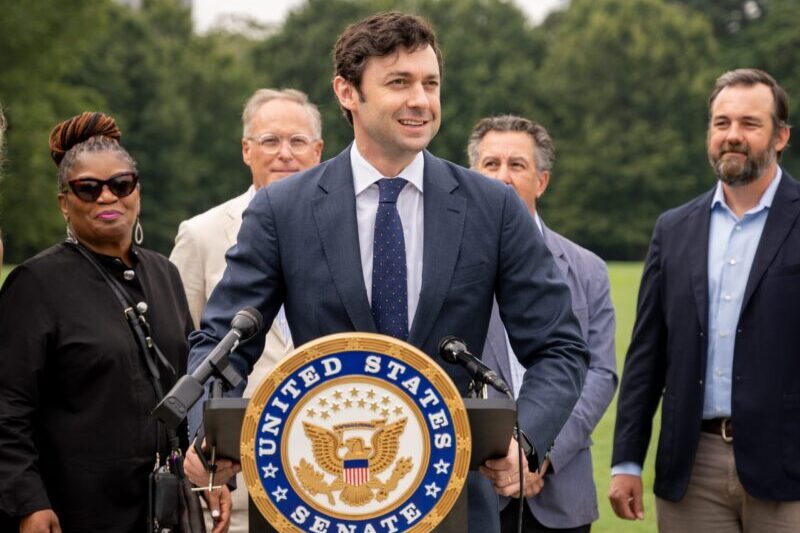

Senator Raphael Warnock (D-GA) is leading several of his Senate colleagues in a new letter to State Department senior leaders regarding the Trump Administration’s efforts to obtain personal health data from African countries in exchange for global health funding.
Why is the Trump Administration pursuing this data? The Administration’s push for sensitive information is part of its "America First Global Health Strategy." This is an initiative requiring countries to sign bilateral agreements to receive foreign assistance.
Traditionally, public health data is shared with the U.S. through anonymized exports. Under new agreements, the State Department is requiring direct log-in access to foreign nations’ national health systems.
What Sen. Raphael Warnock and his colleagues had to say in the letter:
- “We write with great concern regarding the Department of State (“State”) Data Sharing Agreements (DSAs) negotiated with foreign nations as part of the America First Global Health Strategy. In some instances, these DSAs require U.S. government officials to have direct log-in credentials for highly sensitive nationally-owned data systems.
- “This is unprecedented and at odds with U.S. policy concerning the data of American citizens. We request a briefing and additional information on these developments.
- “While global health programs have historically included data sharing components, they have never required direct access to privileged electronic systems for U.S. government representatives.
- “Indeed, these new demands set an alarming precedent that is seemingly contrary to the Administration’s longstanding support for the privacy of U.S. citizens’ data.
- “We support efforts to protect the privacy of Americans’ data, and we are concerned that requiring U.S. government officials be provided access credentials to other nations’ sensitive health data systems may set international precedents that ultimately harm Americans.”
Further Context: Historically, the U.S. has played a pivotal role in the global health space, serving as the main funder and implementer of global health programs.
President Trump has moved away from this in his second term in a variety of ways, including withdrawing from the World Health Organization (WHO) and dismantling the robust foreign assistance ecosystem that cemented American leadership in global health.