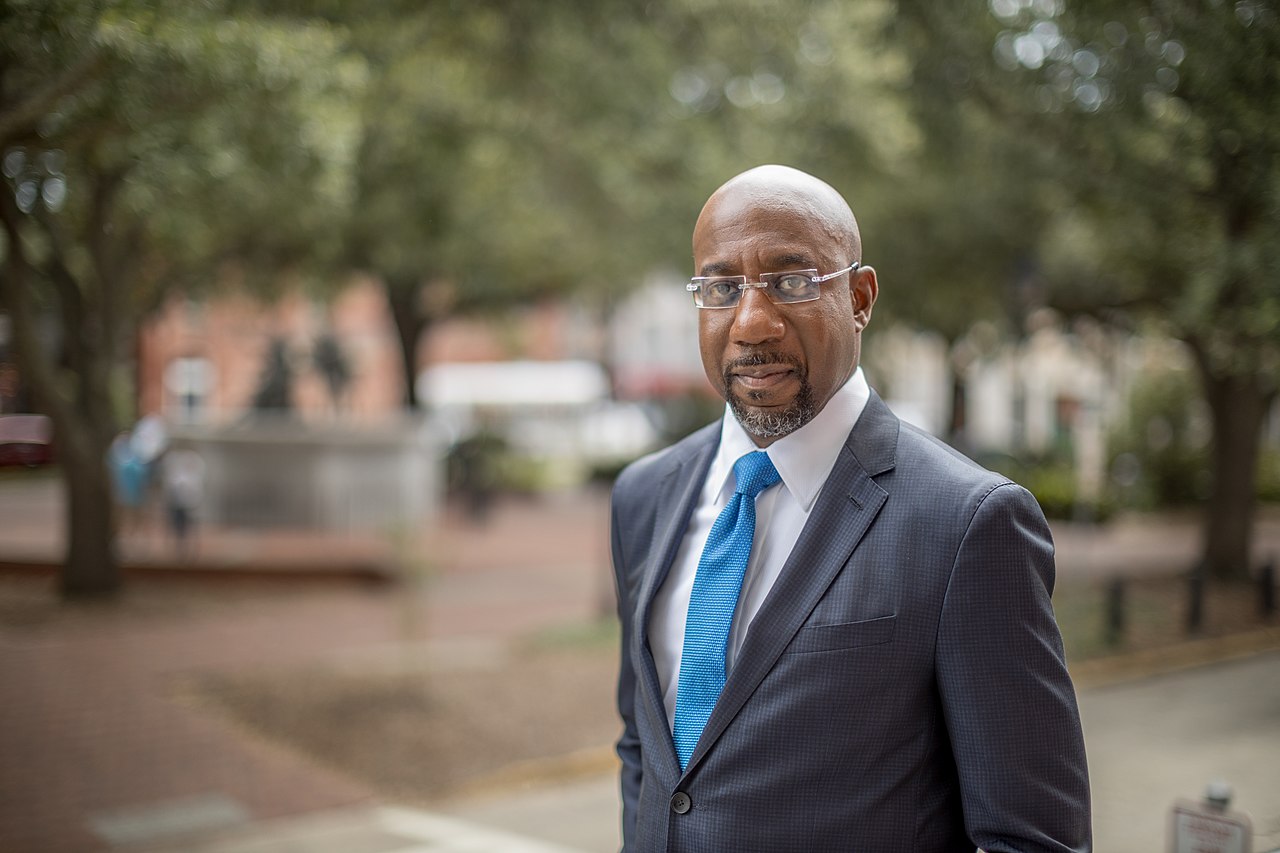

DeKalb County's district attorney, Sherry Boston, filed a lawsuit against the state of Georgia in Fulton County Superior Court over House Bill 369, recently signed by Governor Brian Kemp, which would make several local elections in five metro Atlanta counties nonpartisan.
Boston officially announced her plans to do so on Wednesday at a press conference in Liberty Plaza across from the state capitol. The lawsuit was filed later that day.
The law, which is set to go into effect in 2028, impacts Fulton, DeKalb, Gwinnett, Cobb, and Clayton counties. Tax commissioner, clerk of court, and solicitor general elections will be affected in those counties, in addition to district attorney elections.
Boston is suing on the grounds of unconstitutionality, and was joined at the press conference by the district attorneys of Fulton, Clayton, and Cobb counties, Fani Willis, Tasha Mosley, and Sonya Allen, respectively.
Boston argues the law is designed to weaken Democratic voting power.
"I look at this lawsuit as another way that we are fighting back to make sure that four million voters continue to have the same type of political information and voice as the rest of Georgia," Boston said.
Gwinnett County District Attorney Patsy Austin-Gatson was notably absent from the press conference in which the lawsuit was announced, which Boston attributed to her desire to make clear the separation between the lawsuit and the Georgia district attorneys' association, of which she serves on the board. However, Austin-Gatson has previously shown support for the lawsuit.
The lawsuit will challenge the validity of the law in three different ways, according to Boston's filed lawsuit.
- Boston's first claim is that the law violates Georgia's constitutional uniformity clause, which requires that laws must be the same throughout the state, preventing specific areas of the state from being singled out.
"Republicans, here at the state capitol, only want to take politics out of the equations in counties where they don't have a majority," Boston said. "The Georgia Supreme Court has repeatedly held that laws that target just one, or a handful, of counties are unconstitutional."
2. The second claim is that HB369 violates Georgia and the United States' Equal Protection Clauses, mandating that laws must protect all people equally.
"The legislature did not give any legitimate reason for treating our counties, our elected officials, our voters different from the rest of the state's 154 counties," Boston said. "And it is very hard to ignore that the five counties targeted by the law have large Black voter populations and have all elected Black female district attorneys."
The bill impacts any county that has no coroner position and instead elects a medical examiner. The five metro Atlanta counties affected are the only ones in the state that fit that criteria. Boston said that a county's employment of a medical examiner rather than a coroner has no ties to the need for nonpartisan elections.
3. The final claim included in the lawsuit was a violation of Georgia's Rejected Bills Clause, which prevents the legislature from considering a previously rejected measure unless the rejecting chamber allows it by a two-thirds vote. According to the lawsuit, a nonpartisan county elections bill, named Senate Bill 573, was failed by the Senate in March.
SB 573 is essentially identical to HB369, with both bills only impacted counties that have no coroner position.
"To the voters of Georgia, especially in Clayton, Cobb, DeKalb, Gwinnett and Fulton, I want you to know that I will always stand up for you and your rights, your voice and your vote matter," Boston said. "I will do everything in my power to stop those who want to give you less based on which county you call home."
The state has 30 days to respond to the lawsuit.