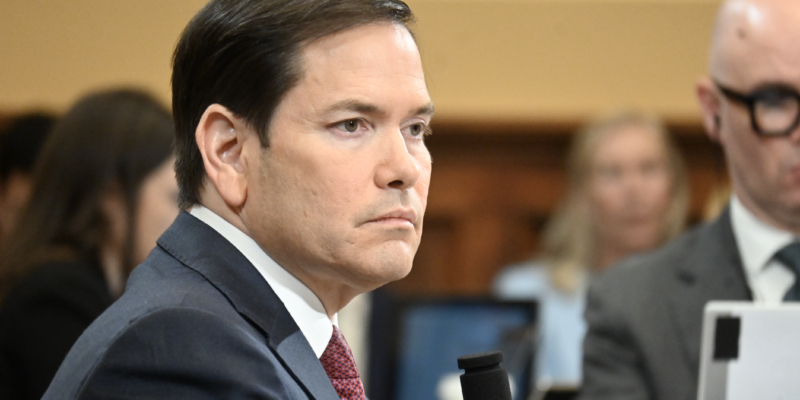

Secretary of State Marco Rubio and the U.S. Department of State (DoS) announced this week a response to Chilean officials who have sought to undermine regional security in the Western Hemisphere by imposing visa restrictions on several Chilean government officials.
“Today, the Department of State is announcing it has taken steps to impose visa restrictions on three Chilean government officials who knowingly directed, authorized, funded, provided significant support to, and/or carried out activities that compromised critical telecommunications infrastructure and undermined regional security in our hemisphere,” Secretary Rubio said in a press statement.
Secretary Rubio confirmed that the official’s immediate family members will also be denied entry into the US, and any U.S. visas they hold will be revoked.
The move reaffirms that the State Department’s actions align with President Donald Trump’s commitment to safeguard the U.S.’s economic prosperity and national security within the Hemisphere.
“We continue to promote accountability for Chilean nationals who intentionally work to destabilize our hemisphere,” Secretary Rubio expressed. “In its twilight, the Boric government’s legacy shall be further tarnished by actions that undermine regional security at the ultimate expense of the Chilean people.”
In addition, Secretary Rubio shared his optimism towards advancing shared priorities with the newly elected Chilean President José Antonio Kast and his administration. Kast is set to take office on Mar. 11, 2026.
DoS confirms that the sanctions on the officials and their families are imposed through Section 212(a)(3)(C) and Section 221(i) of the Immigration and Nationality Act.
Previously, Secretary Rubio and the DoS imposed the same sanctions on 18 Iranian regime officials and telecommunications industry leaders for their role within the regime’s violence and repression against peaceful protestors.
“This visa restriction policy will target individuals who are complicit, or believed to be complicit, in serious violations of human rights, particularly inhibiting the right of Iranians to free expression and peaceful assembly. 58 individuals have now been targeted by this policy,” the Department announced.