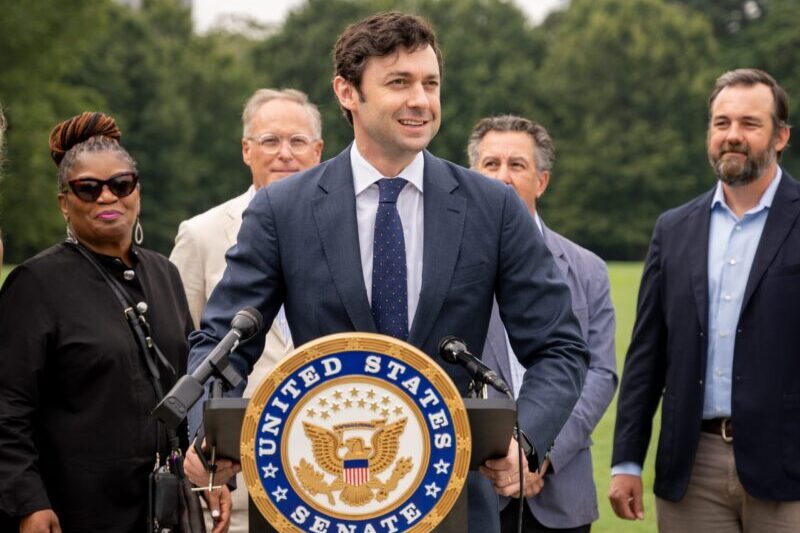

Senator Jon Ossoff (D-GA) recently co-sponsored Senate Bill (S) 1549, also known as the Water Cybersecurity Enhancement Act of 2025. This bipartisan bill was introduced by Senators Ruben Gallego (D-AZ) and Tom Cotton (R-AR) in May 2025 and has been on the Senate floor since.
The primary purpose of this bill is to ensure that the Environmental Protection Agency (EPA) provides grants to community water systems that can be utilized for cybersecurity training.
This comes after a report from the EPA’s Office of the Inspector General revealed that 97 drinking water systems serving approximately 26.6 million Americans were identified as having either critical or high-risk cybersecurity vulnerabilities.
S. 1549 also heavily amends the Safe Drinking Water Act (SDWA), which was enacted in 1974 and gives the EPA regulatory power over the drinking water supply. This bill was originally passed to counter threats such as chemicals, pesticides, and animal waste, and has been amended twice.
The SDWA applies to every public water system in the country, amounting to over 170,000 regulated systems. The EPA is responsible for setting national standards, but works with states and local organizations to maintain expectations.
Overall, S. 1549 is quite short and only amounts to one and a half pages worth of content. It amends three paragraphs with new date requirements and adds only one new provision. This provision is what requires the EPA to grant funding for training programs, manuals, and guidance materials related to cybersecurity.
Sen. Jon Ossoff commented on S. 1549 and the understated threat that cyber attacks pose to local communities. To him, this is absolutely crucial for protecting the economy and public health of Georgians.
“Our critical water systems face the risk of being compromised through cyberattacks that can threaten crucial supply chains and contaminate the drinking supply that millions of Georgians depend on,” Ossoff stated. “This bipartisan bill will help safeguard the health of Georgians and protect Georgia’s economy.”